
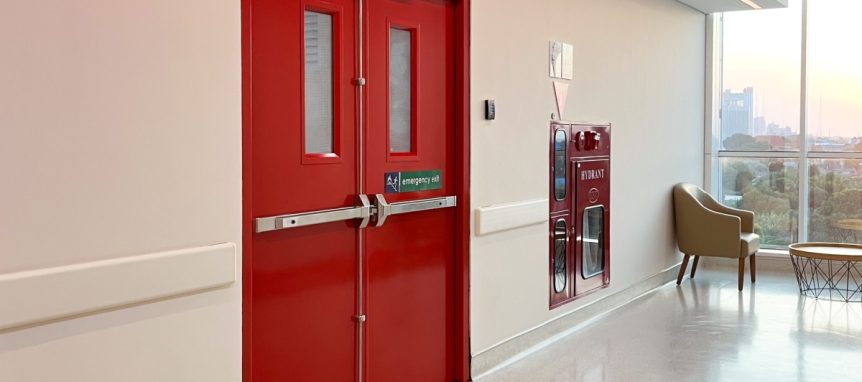
Fire safety in commercial and industrial buildings relies on more than alarms and sprinklers. One of the most critical, yet often overlooked, elements of a comprehensive fire protection strategy is building compartmentalization. Fire-rated doors play a central role in this approach by helping contain fire and smoke, protecting occupants, and limiting structural damage during an emergency.
In facilities such as warehouses, office complexes, healthcare buildings, and multi-tenant properties, properly installed fire-rated doors work as part of a larger system designed to slow the spread of fire. Understanding how these doors support compartmentalization can help property owners and managers make informed decisions that enhance safety and code compliance.
Understanding Building Compartmentalization
Building compartmentalization is the practice of dividing a structure into smaller sections using fire-resistant barriers. These barriers include walls, floors, ceilings, and doors that are designed to withstand fire for a specified period of time. The goal is to confine fire and smoke to a limited area, allowing occupants more time to evacuate and reducing the risk of fire spreading throughout the entire building.
Fire-rated doors are essential to this system because they protect openings within fire-rated walls. Without a properly rated door, even the most fire-resistant wall can fail to contain flames or smoke. When closed, fire-rated doors help maintain the integrity of fire compartments and support the overall life safety strategy of the building.
Containing Fire and Smoke Spread
One of the primary functions of fire-rated doors is to slow the movement of fire and smoke between compartments. During a fire, smoke often spreads faster than flames and is one of the leading causes of injury. Fire-rated doors are designed to resist heat and block smoke migration when installed with proper seals and hardware.
By limiting the spread of smoke and fire, these doors help protect exit routes, stairwells, and adjacent spaces. This containment allows emergency responders to work more effectively and reduces the likelihood of widespread damage. In large commercial buildings, even a short delay in fire spread can make a significant difference in safety outcomes.
Supporting Safe Egress and Occupant Protection
Fire-rated doors are commonly installed along corridors, stairwells, and exit pathways to protect occupants as they evacuate. These doors help keep escape routes usable by preventing smoke and heat from entering critical areas during an emergency.
Many fire-rated doors are also equipped with panic hardware or automatic closers to ensure they operate correctly under stress. Properly installed doors close automatically during a fire, sealing off compartments without requiring manual intervention. This function is especially important in busy facilities where doors may otherwise be left open during normal operations.
Meeting Fire Code and Regulatory Requirements
Fire-rated doors are required by building and fire codes in many commercial and industrial settings. Regulations often specify where these doors must be installed, how long they must resist fire, and what type of hardware is allowed. Codes such as NFPA 80 outline strict guidelines for fire door assemblies, including installation, inspection, and maintenance requirements.
Failure to install or maintain fire-rated doors properly can result in code violations, failed inspections, and increased liability. From a compartmentalization standpoint, a non-compliant door can compromise an entire fire barrier system, making professional installation and regular evaluation essential.
Enhancing Protection in Complex Facilities
In multi-use or multi-tenant buildings, compartmentalization becomes even more important. Fire-rated doors help separate different occupancies, storage areas, and operational zones, reducing the risk that a fire in one space will impact others.
For example, warehouses with office areas, mechanical rooms, or hazardous storage zones rely on fire-rated doors to isolate higher-risk areas. Similarly, healthcare and educational facilities use fire-rated doors to protect patient rooms, classrooms, and evacuation routes. These doors allow buildings to function efficiently while still maintaining critical fire protection boundaries.
The Importance of Proper Installation
Even a certified fire-rated door cannot perform its role in compartmentalization if it is installed incorrectly. Gaps, misalignment, incorrect hardware, or damaged seals can all reduce a door’s effectiveness. Professional installation ensures that the door, frame, and hardware work together as a complete fire-rated assembly.
Experienced installers understand the importance of maintaining proper clearances, using approved components, and ensuring doors close and latch as required. This attention to detail preserves the door’s rating and ensures it contributes fully to the building’s compartmentalization strategy.
Strengthening Fire Safety Through Smart Design
Fire-rated doors are a critical element in controlling fire spread and protecting lives. When used as part of a well-designed compartmentalization plan, they help limit damage, support safe evacuation, and keep buildings compliant with safety regulations.
B&B Door Company provides expert installation of fire-rated commercial door systems designed to support building compartmentalization and long-term safety. If your facility requires fire-rated doors or an upgrade to existing systems, contact B&B Door Company today to discuss solutions tailored to your building’s needs.